Making freelance project email more efficient
For a period, I helped a freelancer streamline how they worked through incoming project email. The goal was to get from a first message to a clear next step with less time spent sorting and rereading threads.
Herb Trevathan · 2 min read
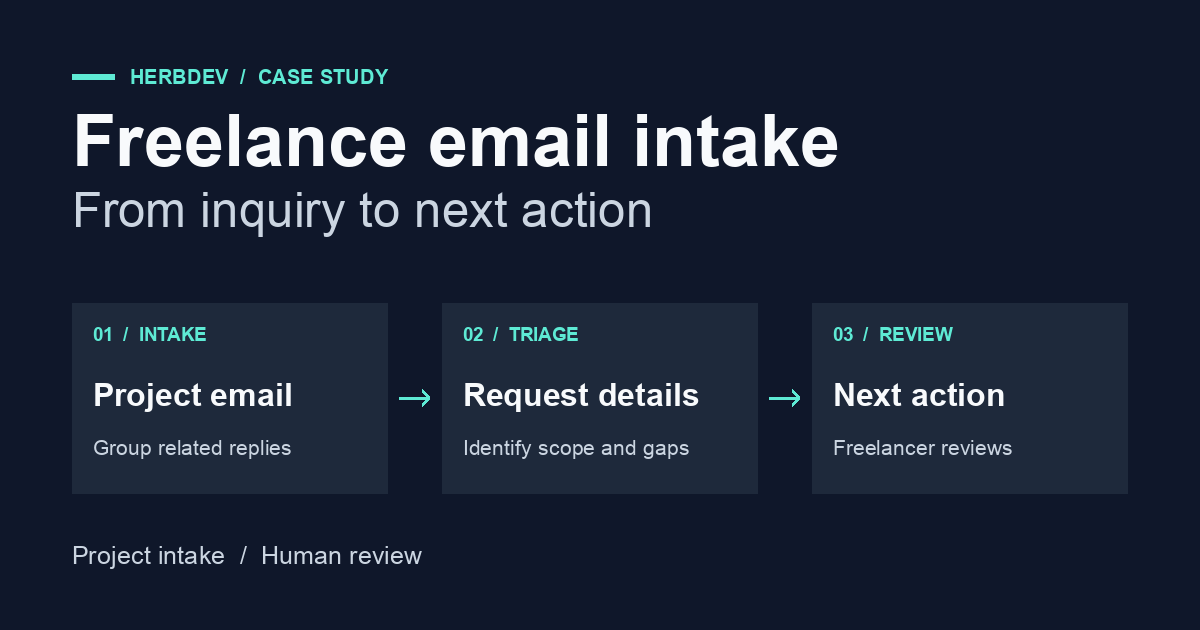
Where email intake takes time
A freelance inquiry can combine a website change, a mobile app problem, and a question about ongoing support in one thread. Replies often supply the details in pieces. Sorting by a subject line or a single keyword gives the freelancer another place to look while leaving the decision about what happens next in the inbox.
I worked on the email intake workflow for a time to make that review more efficient. The useful unit of work was the request as a whole. What is the person asking for? What information has already been provided? What do we need before we can scope the work?
- Group messages by project
- Identify the request and gaps
- Review the next action
Where an open-weight model fits
For a model-based version, I would start with a Llama-family model and a labeled set of anonymized inquiry threads. Each example would pair a thread with its service categories, missing information, and suggested next action. I would compare a prompted baseline with a fine-tuned model on held-out threads, keeping replies from the same project together so the evaluation measures new inquiries.
This case study covers my freelance intake work. The open-weight model is a proposed extension, with training and rollout described as a design.